

Best Pigmentation Removal Creams: Benefits, Ingredients & How to Choose


Uneven skin tone, dark spots, and stubborn pigmentation can affect your confidence and make skincare feel like a constant struggle. From sun exposure and acne scars to hormonal changes and aging, pigmentation issues are extremely common—especially in Indian skin tones. While treatments like chemical peels and laser procedures exist, many people prefer a gentler, affordable, and at-home solution.
That’s where pigmentation removal creams come in. When chosen wisely and used consistently, they can help fade dark spots, brighten dull skin, and improve overall complexion. In this blog, we’ll explore the benefits of pigmentation removal creams, the most effective ingredients, and how to choose the right one for your skin type.

What Is Skin Pigmentation?
Skin pigmentation refers to the coloring of your skin caused by melanin. When melanin production becomes uneven or excessive, it leads to hyperpigmentation, which appears as dark patches or spots on the skin.
Common Types of Pigmentation
- Melasma: Hormonal pigmentation, often seen on cheeks and forehead
- Post-inflammatory hyperpigmentation (PIH): Dark marks left after acne or injuries
- Sun spots / Age spots: Caused by prolonged sun exposure
- Freckles: Genetic or sun-induced pigmentation
Understanding the type of pigmentation you have is essential before choosing a cream.

Benefits of Using Pigmentation Removal Creams
Pigmentation creams are one of the most accessible solutions for improving uneven skin tone. Here’s why they’re so popular:
1. Reduces Dark Spots
Targeted actives help break down excess melanin, gradually fading pigmentation and acne marks.
2. Brightens Overall Skin Tone
Regular use promotes a more radiant, even complexion.
3. Easy to Use
They fit seamlessly into your daily skincare routine—no downtime or clinic visits needed.
4. Cost-Effective
Compared to dermatological procedures, creams are affordable and long-lasting.
5. Prevents Future Pigmentation
Many formulas include antioxidants and SPF support to protect against new dark spots.
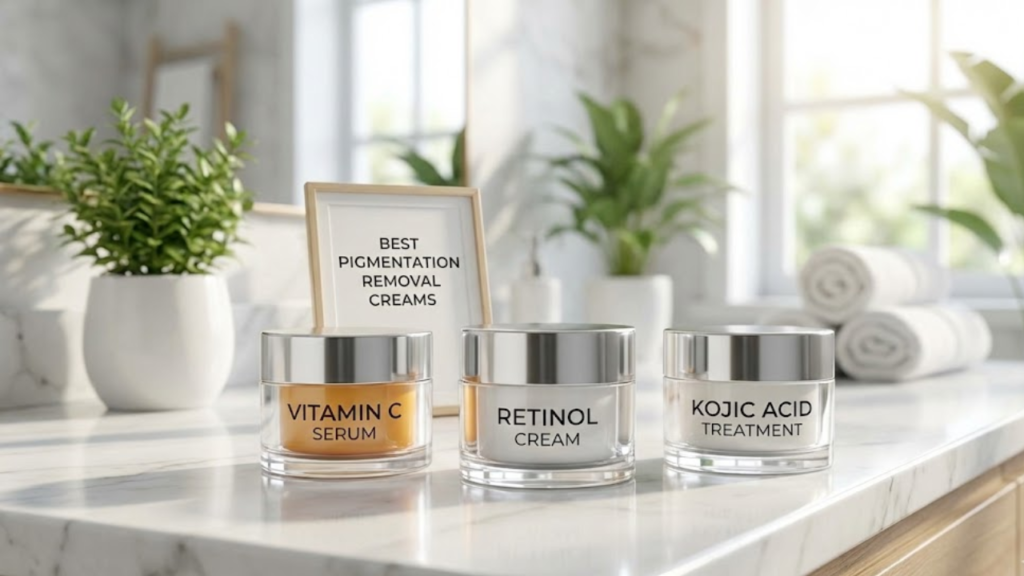
Key Ingredients to Look for in Pigmentation Removal Creams
The effectiveness of any pigmentation cream depends on its ingredients. Here are the most proven and dermatologist-recommended ones:
Vitamin C
- Brightens skin and reduces dark spots
- Protects against sun damage
- Suitable for most skin types
Niacinamide
- Reduces melanin transfer
- Strengthens skin barrier
- Ideal for sensitive and acne-prone skin
Retinol / Retinoids
- Boosts cell turnover
- Fades pigmentation and improves texture
- Best used at night with sunscreen during the day
Azelaic Acid
- Reduces inflammation and pigmentation
- Excellent for acne-related dark spots and rosacea
Kojic Acid
- Inhibits melanin production
- Effective for sun spots and melasma
Alpha Arbutin
- Gentle yet effective skin-brightening agent
- Safe for long-term use
Licorice Extract
- Calms irritated skin
- Naturally brightens pigmentation
Tip: Ingredients like hydroquinone can be effective but should only be used under dermatological supervision.

How to Choose the Right Pigmentation Removal Cream
Not all creams work the same for everyone. Follow these steps to make the right choice:
1. Identify Your Skin Type
- Dry skin: Look for creams with hyaluronic acid and ceramides
- Oily skin: Lightweight, non-comedogenic formulas
- Sensitive skin: Avoid harsh acids and fragrance
2. Know Your Pigmentation Type
Melasma, acne scars, and sun spots require different active ingredients.
3. Check the Ingredient List
Avoid products with high alcohol content or unknown bleaching agents.
4. Always Patch Test
Test on a small area before full application to prevent irritation.
5. Never Skip Sunscreen
Without SPF, pigmentation creams won’t work effectively—and pigmentation may worsen.

How to Use Pigmentation Removal Creams Correctly
- Cleanse your face before application
- Apply a thin layer only on affected areas
- Use at night unless specified otherwise
- Follow with moisturizer
- Apply sunscreen every morning
Consistency is key—visible results usually appear within 4 to 8 weeks.
Common Mistakes to Avoid
- Expecting overnight results
- Using multiple active ingredients together
- Skipping sunscreen
- Over-exfoliating the skin
- Using strong creams without guidance
Final Thoughts
Pigmentation removal creams can be a game-changer when chosen thoughtfully and used consistently. By understanding your skin type, identifying the right ingredients, and following proper application methods, you can effectively reduce dark spots and achieve a brighter, more even complexion.
FAQs
How long does it take to remove pigmentation?
Most creams show visible improvement in 4–8 weeks with regular use.
Can pigmentation return?
Yes, if sunscreen is not used or triggers like sun exposure continue.
Are pigmentation creams safe for daily use?
Yes, if they contain gentle, dermatologist-approved ingredients.
Can pregnant women use pigmentation creams?
Avoid retinoids and hydroquinone—always consult a doctor.